
Wangiri Scam Calls in Nigeria: Why You Should Never Call Back That Missed Call
Your phone rings once.
Before you can answer, the call has already ended.
You check the number. It is unfamiliar, possibly an international number. Naturally, you may wonder: Who called me? Was it important? Should I call back?
Don't rush to call back.
You could be looking at a Wangiri scam.
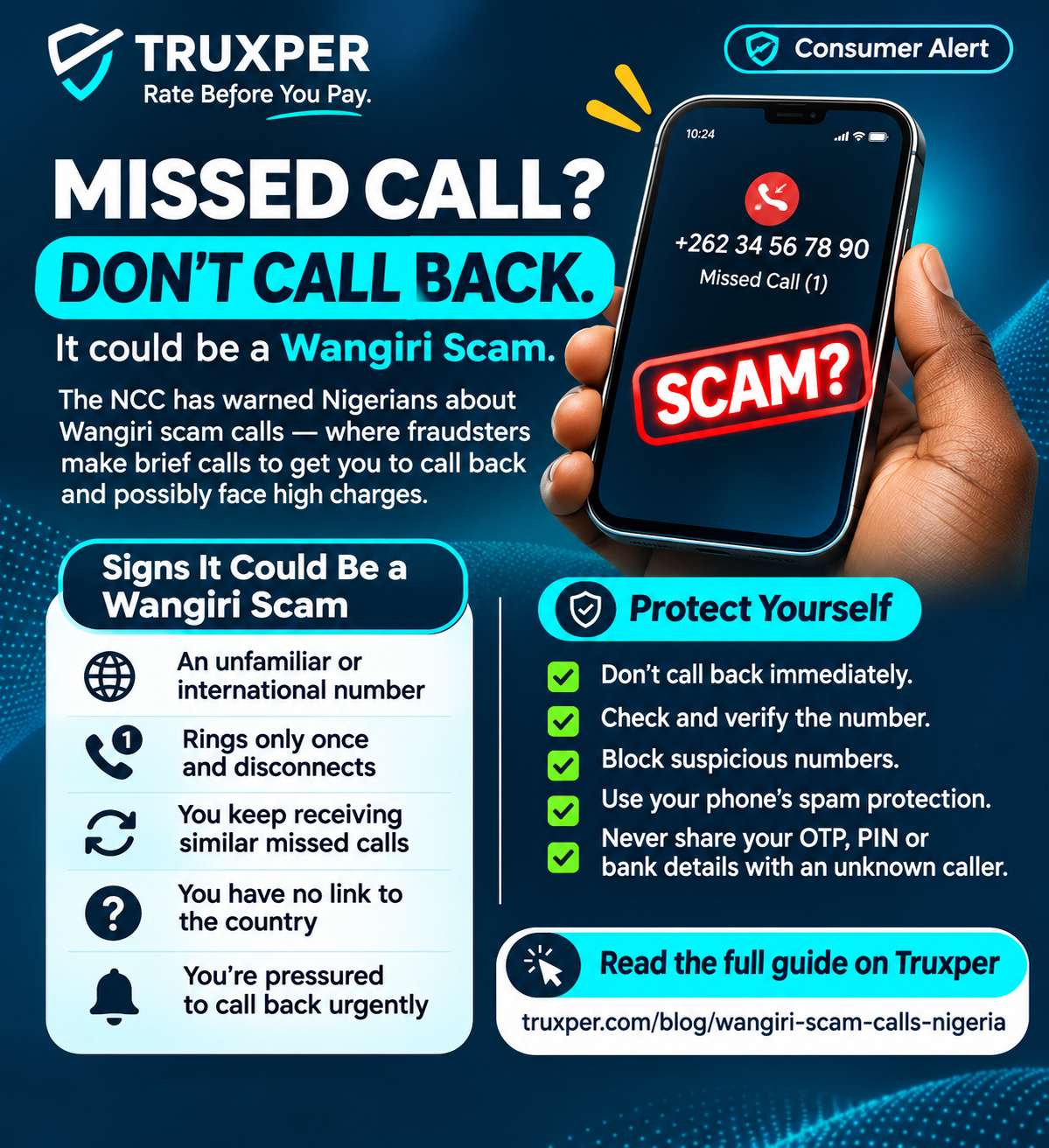
The Nigerian Communications Commission (NCC) issued a consumer alert on 26 October 2026 warning Nigerians about Wangiri scam calls, where fraudsters deliberately make brief calls to encourage people to call back.
Here's what you need to know.
What Is a Wangiri Scam?
"Wangiri" is a Japanese term meaning "one ring and cut."
The scam is relatively simple.
A fraudster calls your phone and disconnects after one ring or before you have a chance to answer.
The goal is to make you curious enough to return the call.
When you call back, you may be connected to a premium-rate or international number that can result in high charges. Fraudsters may also keep you on the line using recorded messages, music, automated systems or enticing offers to increase the cost of the call.
In other words:
The missed call is not necessarily the problem. Calling it back can be.
How Does the Wangiri Scam Work?
A typical Wangiri scam can happen in five steps:
1. You receive a very short call
Your phone rings briefly and stops before you can answer.
2. You see an unfamiliar number
The number may be international or otherwise unfamiliar to you.
3. Curiosity kicks in
You wonder whether it was a friend, business contact, delivery company or someone with an important message.
4. You call the number back
This is what the scammer wants.
5. You may be connected to an expensive service
The returned call may route to a premium-rate or international number, potentially resulting in significant charges.
Some scammers then try to keep you connected for as long as possible.
5 Warning Signs of a Wangiri Scam
Not every missed call is a scam. However, be especially careful when you notice several of these signs.
1. The number is unfamiliar and international
If you don't recognise the number and have no reason to expect an international call, don't automatically call back.
2. It rang only once
A one-ring call that immediately disconnects is one of the classic signs of Wangiri fraud.
3. You keep receiving missed calls
Repeated calls from unfamiliar numbers can be another warning sign.
4. You have no connection to the country
If the call appears to come from a country where you have no family, friends, customers or business interests, there is little reason to return it without verification.
5. You're encouraged to call back urgently
Be suspicious if a missed call is followed by a message claiming you have won something, there is an emergency, or you need to call back immediately.
What Can Happen If You Call Back?
The biggest immediate risk is unexpected call charges.
According to the NCC, returning a Wangiri call can connect a consumer to a premium-rate or international number that attracts high charges. Fraudsters may deliberately keep the caller engaged to increase the cost.
That means a simple decision to return a missed call could potentially turn into an expensive phone bill or airtime deduction.
The safest approach is simple:
If you don't recognise the number, verify it before calling back.
Can a Missed Call Hack Your Phone?
Simply receiving a missed call does not mean that your phone has automatically been hacked.
The Wangiri scam described by the NCC primarily relies on tricking you into returning the call and potentially incurring charges.
However, phone-based scams can take other forms.
For example, criminals may use calls or messages to persuade people to reveal passwords, PINs, OTPs or other sensitive information, or to click malicious links.
So don't assume that someone calling you is legitimate simply because they know your phone number.
What Should You Do When You Receive a Suspicious Missed Call?
Don't call back immediately
This is the most important step.
If you don't recognise the number, don't let curiosity make the decision for you.
Check the number first
Look at the country code and consider whether you have any legitimate reason to receive a call from that location.
Use another channel to verify
If you believe the call could genuinely be important, contact the person or organisation through a trusted number or official communication channel.
Block suspicious numbers
If the number repeatedly calls and appears suspicious, block it on your phone.
Use your phone's spam protection
Many modern phones and mobile apps can identify or filter suspected spam and fraudulent calls.
Never give sensitive information to an unexpected caller
Never disclose your:
OTP
PIN
Password
Banking details
Card information
Verification codes
A legitimate organisation should not require you to hand over confidential security information to an unexpected caller.
What If You Already Called Back?
Don't panic.
If you have already returned a suspicious missed call:
End the call.
Check your airtime balance or phone bill for unexpected charges.
Block the number.
Contact your network provider if you notice unusual charges.
Report the suspicious activity through the appropriate telecom complaint channels.
If you provided sensitive financial or account information, contact the relevant bank or service provider immediately.
The NCC's consumer guidance also encourages consumers to report suspicious telecom activity and seek help when necessary.
What About Calls That Look Like Local Nigerian Numbers?
This is another reason to be careful.
The NCC Consumer Portal also warns that consumers may receive international calls that appear to come from local numbers, which can be associated with SIM-box activity used to perpetrate fraud.
So don't assume a number is safe simply because it looks familiar or appears to be Nigerian.
Verify before you trust it.
How to Protect Yourself From Phone Scams
Good phone security starts with simple habits.
Think before you respond
A missed call doesn't automatically require a callback.
Don't let urgency override verification
Scammers often rely on curiosity, fear or urgency to make people act without thinking.
Protect your mobile number
Your phone number may be connected to your bank account, social media accounts, email and other important services. The NCC has also highlighted the importance of protecting phone-number identity and being cautious about sharing personal information.
Keep your phone and apps updated
Security updates can help protect your device against other types of attacks.
Monitor your accounts
Regularly check your bank transactions, airtime and other important accounts for anything unusual.
Wangiri Scam vs Other Phone Scams
It's useful to understand that Wangiri is only one type of phone-based fraud.
The common factor is often the same:
The scammer wants you to act before you have time to verify.
Don't Let Curiosity Cost You
A missed call can feel harmless.
But if you don't recognise the number, there is no reason to automatically call it back.
The recent NCC warning is a useful reminder that scammers can exploit something as simple as curiosity. Wangiri fraud is designed around one basic behaviour:
You see the missed call → you become curious → you call back.
Don't give the scammer the final step.
Rate Before You Pay. Verify Before You Trust.
At Truxper, we believe consumers should have better information before dealing with businesses, sellers and service providers.
Before you pay, transact or trust an unfamiliar business, check what other consumers are saying and look for information that helps you make a better decision.
Rate Before You Pay.
Final Takeaway
If an unfamiliar number rings once and disappears, don't automatically call back.
Especially when:
You don't recognise the number.
It's an unfamiliar international number.
You have no reason to expect the call.
The call keeps happening.
You're being pressured to call back urgently.
Verify first.
A few seconds of caution could save you from an unnecessary charge or a much bigger scam.
Don't call back just because you're curious. Verify before you respond.
Source
Nigerian Communications Commission (NCC) — Consumer Alert: Beware of Wangiri Scam Calls, published 26 October 2026.
For official consumer information and telecom complaints, visit the NCC Consumer Portal.
Comments (0)